Living Wax Museum
Historical Inquiry, Research and Informational Communication
📚 Reading & Research
📝 Informational Writing
🎤 Speaking & Listening
🇺🇲 Social Studies
Integrated Disciplines
Project Overview
In this project, students develop research, informational writing, speaking, and listening skills through an authentic inquiry experience that culminates in a Living Wax Museum presentation. Assuming the role of a Revolutionary War figure, students become historians, researchers, writers, and performers as they bring history to life for an authentic audience.
This project is designed to follow a unit on the causes of the American Revolution and the Revolutionary War, providing students with the historical background needed to conduct meaningful research. Students select a significant historical figure and gather information from multiple sources to learn about the individual's life, contributions, and impact on the Revolution. They analyze and synthesize their research, selecting the most relevant and engaging information to create an informative speech and visual display.
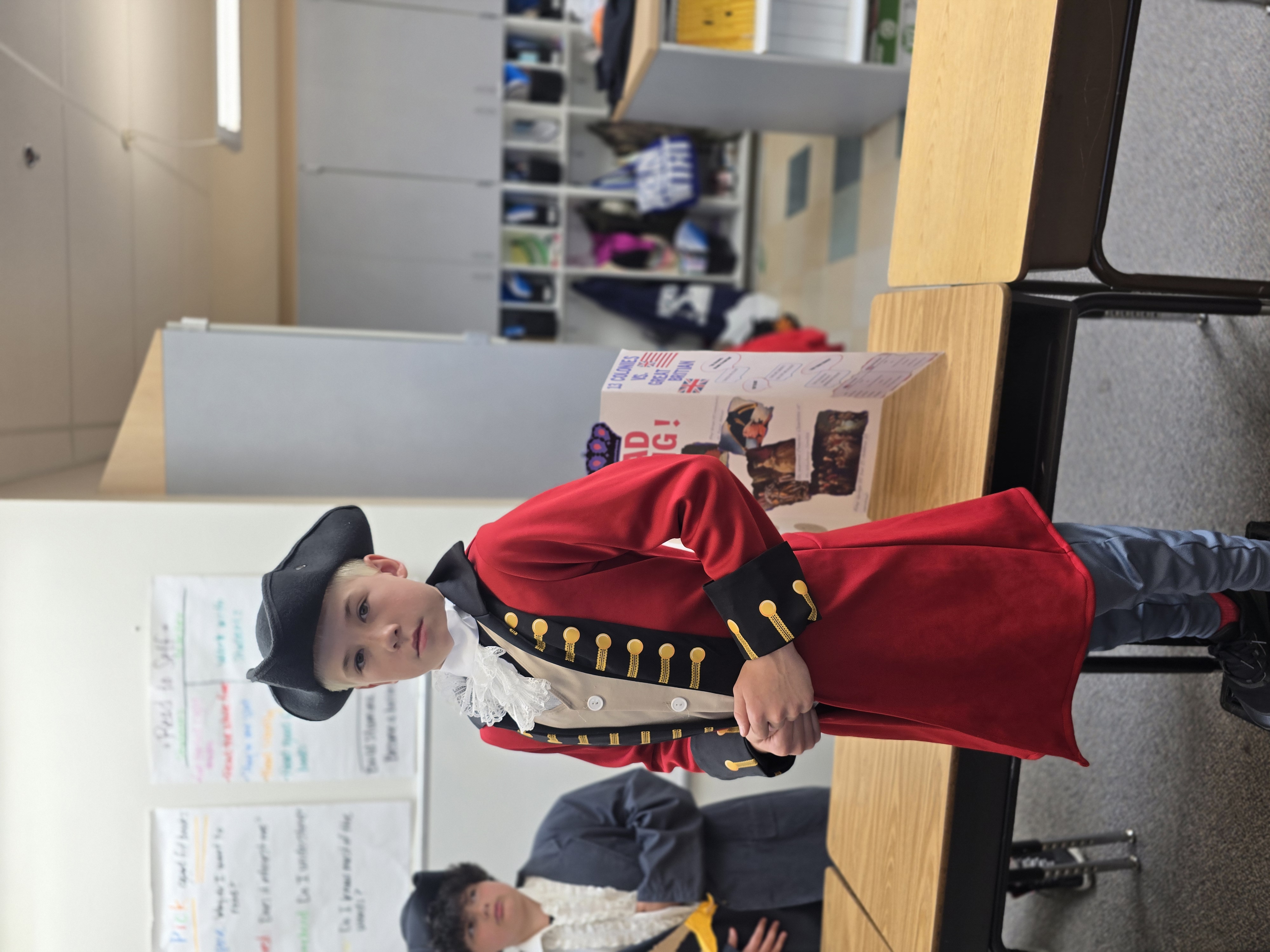
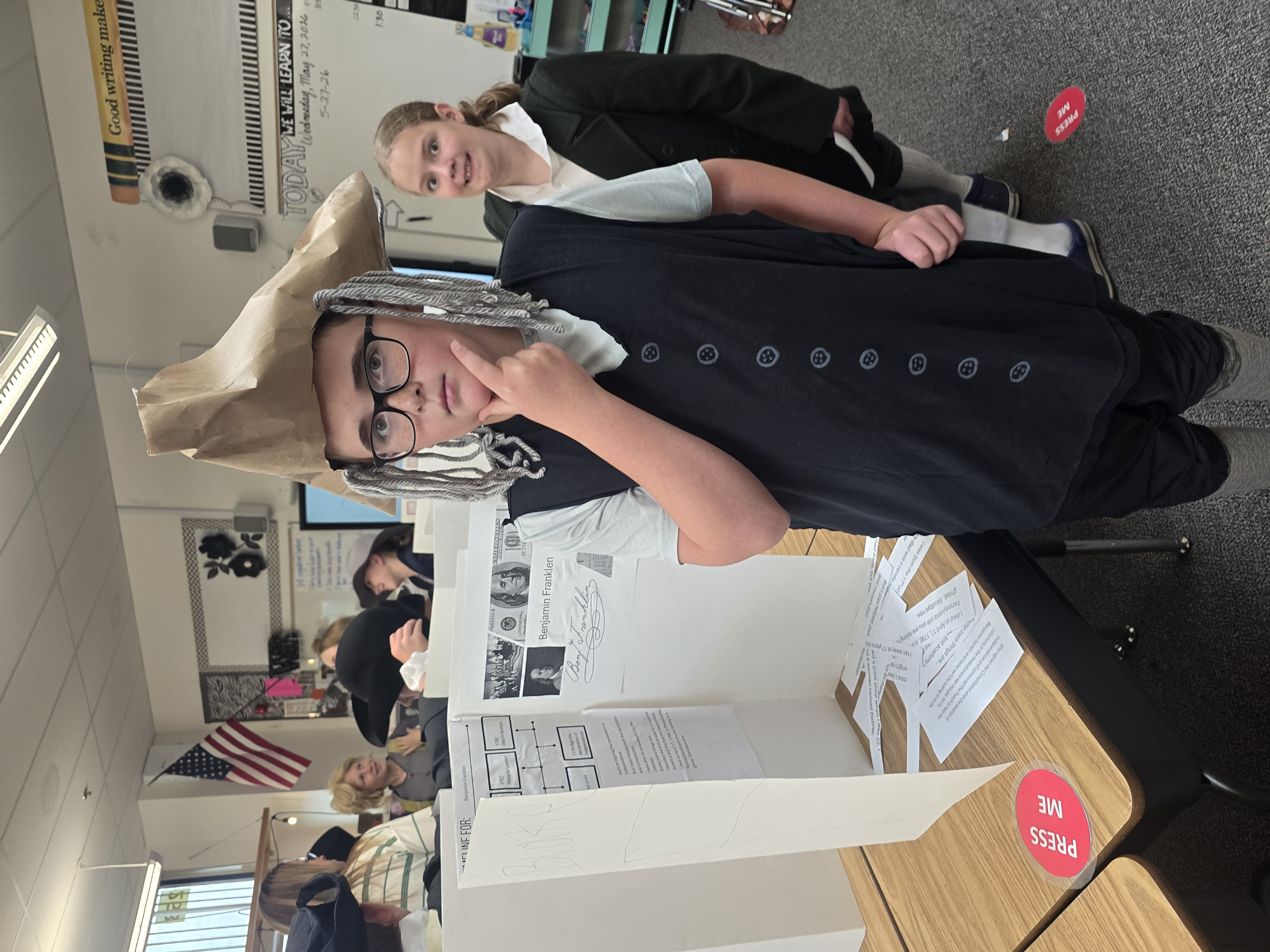
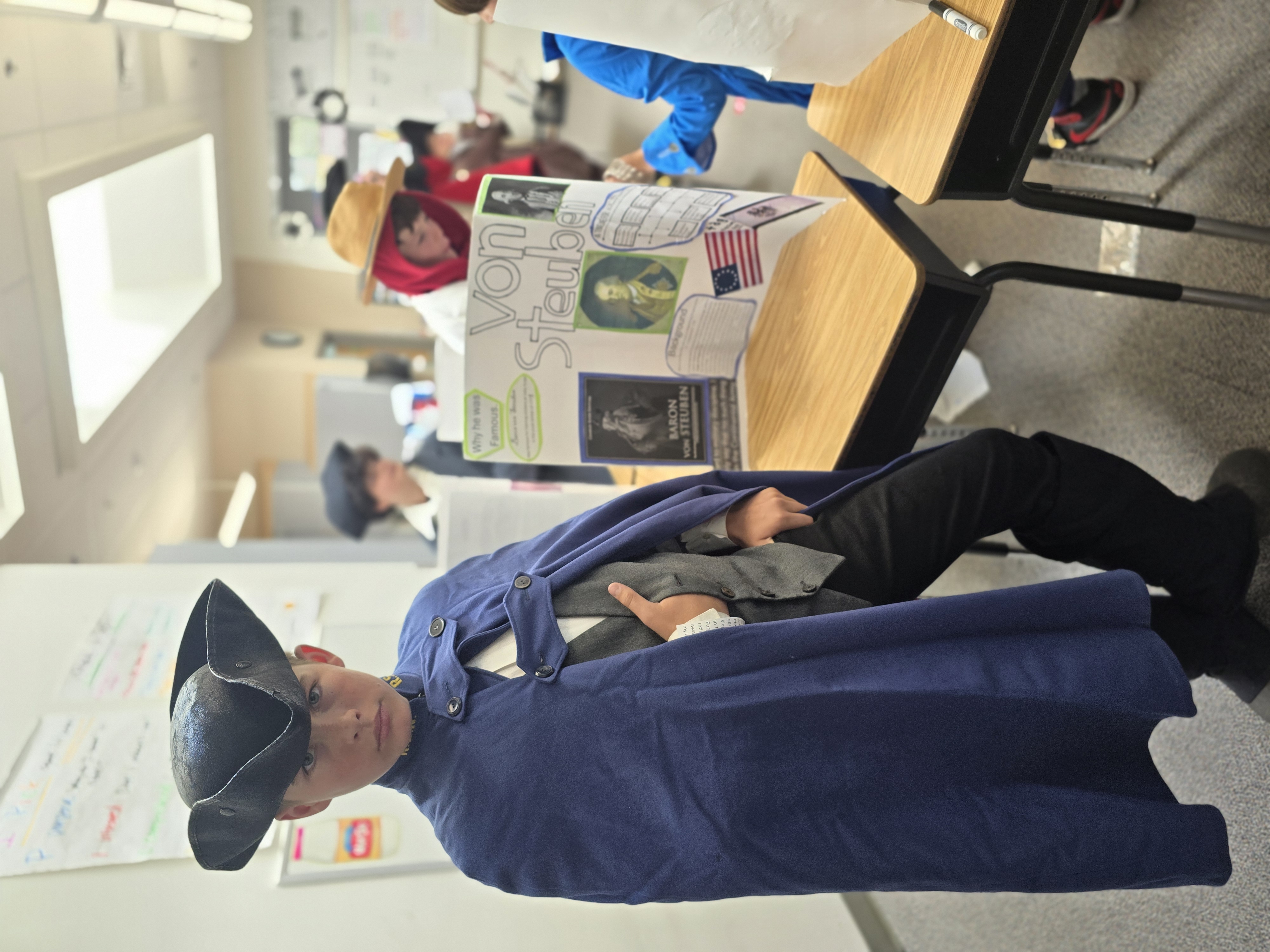
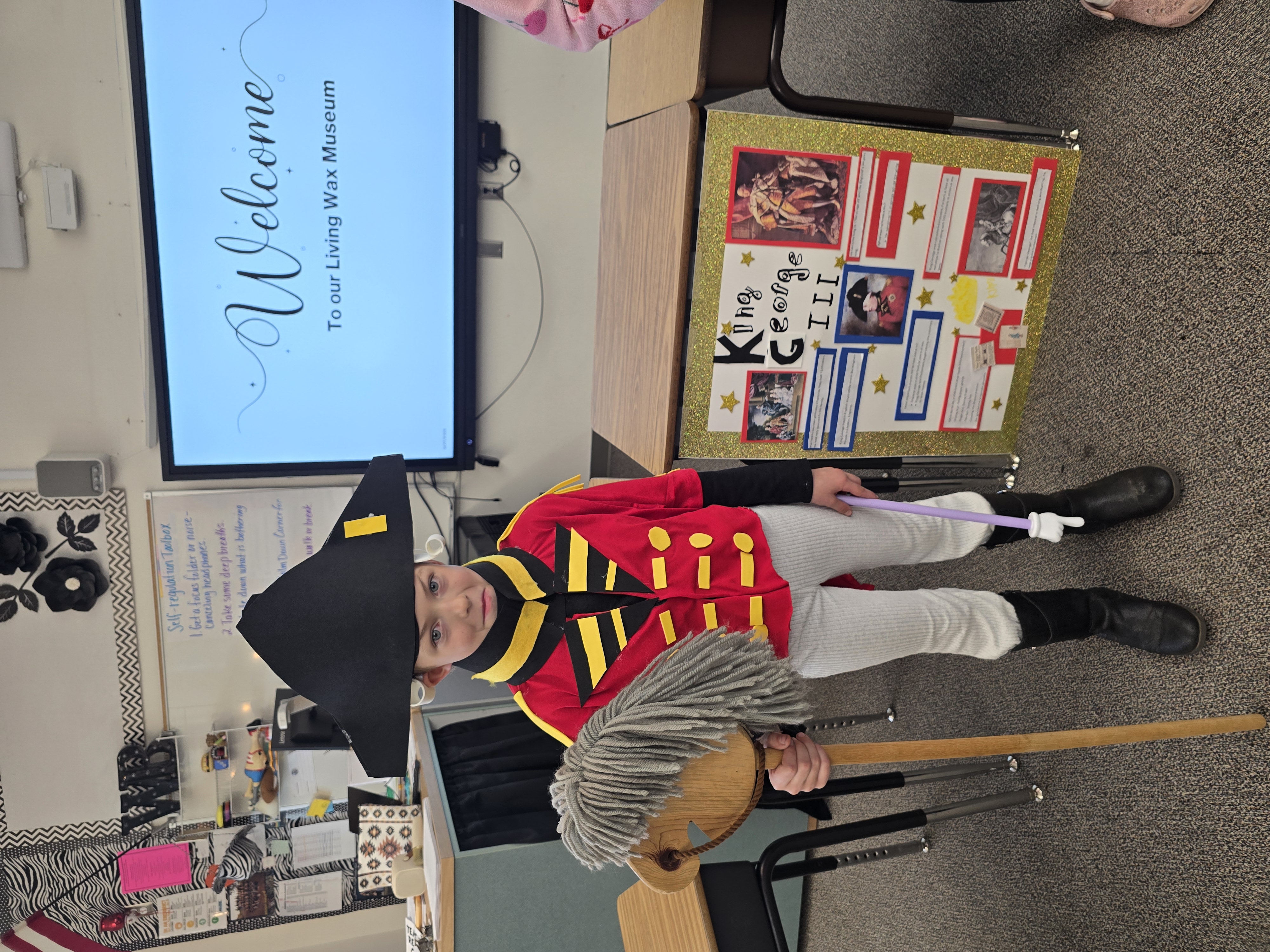
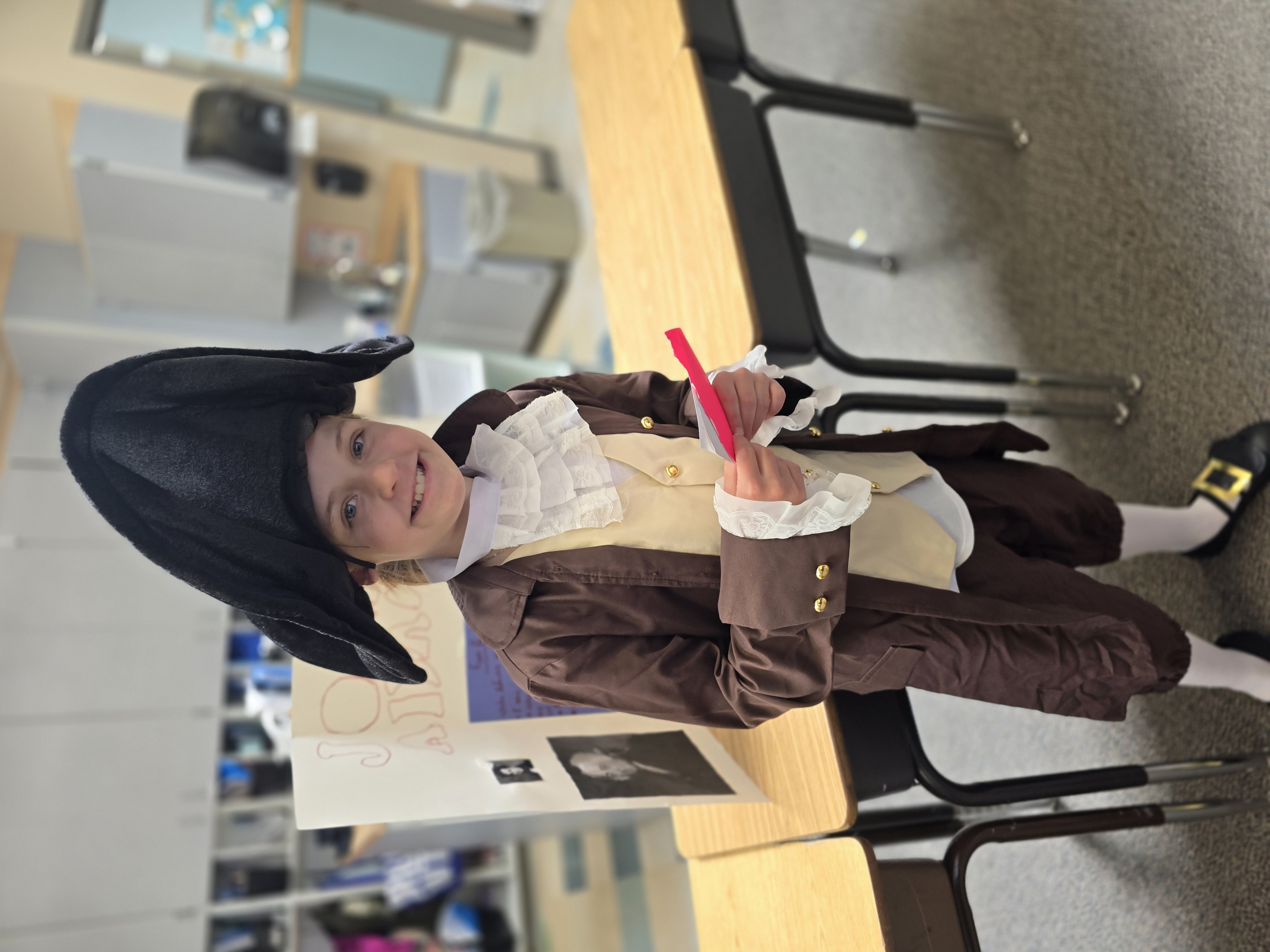
The project culminates in a gallery-style Living Wax Museum, where students dress in costume, assume the persona of their historical figure, and present first-person speeches as visitors circulate throughout the exhibit. This authentic performance task provides students with an opportunity to demonstrate their understanding while developing communication skills and deepening their appreciation of the people who shaped American history.
Design Challenge
Traditional research reports can be difficult for upper elementary students because they require sustained attention, organization, and the ability to synthesize information from multiple sources over an extended period of time. Without an authentic purpose or audience, students often view research and informational writing as a laborious task rather than a meaningful learning experience.
This project was intentionally designed to increase student engagement while maintaining the rigor of the research process. Students begin by selecting a Revolutionary War figure that genuinely interests them, giving them ownership over their learning from the outset. They also have the flexibility to choose from multiple research sources, encouraging independence while developing information literacy skills. Because the project follows a study of the American Revolution, students already possess the historical context needed to understand the significance of the individuals they are researching. This allows them to deepen their understanding by shifting from broad historical events to the personal stories of the people who shaped them.
Throughout the project, students analyze and synthesize information from multiple sources before deciding which facts are most important to include in their speech and visual display. The culminating Living Wax Museum provides an authentic audience and purpose for learning, motivating students to produce high-quality work while developing confidence in public speaking. Finally, the project is intentionally scaffolded into manageable phases that support all learners throughout the research, writing, and presentation process.
Instructional Design Decisions
The following instructional design decisions were intentionally incorporated to increase student engagement, promote historical inquiry, and support students as they develop research, informational writing, and presentation skills through an authentic learning experience.
-
Student Choice- Students select the historical figure they will research, increasing ownership and motivation.
-
Historical Context- The project builds on students' prior learning about the American Revolution, allowing them to deepen rather than simply acquire knowledge.
-
Authentic Audience- The Living Wax Museum gives students a meaningful purpose for their research and writing while increasing accountability.
-
Scaffolded Research Process- The project is broken into manageable phases that support students through research, writing, revision, and presentation.
-
Authentic Performance Task- Rather than submitting a report to the teacher, students demonstrate their learning by becoming the historical figure they researched.
Learning Progression
The Living Wax Museum is designed to help students think and work like historians. Through a carefully scaffolded progression, students investigate historical evidence, synthesize information from multiple sources, and communicate their learning through an authentic first-person portrayal.
The Living Wax Museum project is intentionally designed as a scaffolded inquiry experience that gradually moves students from acquiring historical knowledge to communicating their understanding through an authentic performance. Each phase builds upon the previous one, allowing students to develop research, writing, communication, and presentation skills in manageable steps.
Students begin by building the historical background knowledge and research skills necessary for success. Before selecting a historical figure, they study the causes and major events of the American Revolution while practicing note-taking, summarizing, and evaluating informational sources. This shared foundation allows students to understand the historical significance of the individuals they will later research.
Next, students transition into guided historical inquiry by selecting a Revolutionary War figure and conducting research using multiple sources. Rather than simply collecting facts, they analyze, compare, and synthesize information to determine which details best communicate the individual's life, accomplishments, and contributions to American history.
Once students have developed a strong understanding of their historical figure, they transform their research into a first-person speech. This stage requires students to organize information, determine the most important ideas, and adapt factual research into an engaging presentation written from the historical figure's perspective.
Students then extend their learning by designing an informational display and preparing costumes and props that reinforce their historical portrayal. These visual elements deepen historical understanding while strengthening communication with an authentic audience.
The project culminates in a Living Wax Museum, where students present their speeches to visitors while remaining in character throughout the event. This authentic performance task gives purpose to every phase of the project and provides students with an opportunity to demonstrate both historical understanding and effective communication skills.
Finally, students reflect on their learning through self-assessment and project evaluation. They consider the effectiveness of their research, presentation, and collaboration while identifying areas for future growth. Reflection reinforces the learning process and encourages students to view historical inquiry as an active process of investigation, interpretation, and communication.

Assessment Plan
Students are assessed throughout the project using a combination of formative and summative assessments that measure their understanding of historical content as well as their development of research, writing, speaking, and presentation skills.
Formative Assessments
Formative assessments occur throughout the unit as students complete each phase of the project. Teacher observations, conferences, project checklists, exit tickets, and informal checks for understanding are used to monitor student progress, provide timely feedback, and ensure students understand project expectations before advancing to the next stage.
Summative Assessments
Summative assessments evaluate students' ability to:
-
Conduct historical research and record organized, accurate research notes.
-
Summarize information from multiple sources into well-written informational paragraphs.
-
Deliver a memorized first-person presentation that accurately portrays a historical figure using effective speaking skills.
-
Create a visually appealing museum display that communicates historical information clearly and accurately.
Students are assessed on the quality and accuracy of their historical content, organization of ideas, written communication, visual presentation, and oral presentation skills. Throughout the project, the teacher maintains a Project Progress Checklist to document student completion, monitor progress, and identify students who need additional support or are ready to advance to the next phase of the project.
Because the unit culminates in a public presentation for an authentic audience, students demonstrate their learning by applying research, writing, speaking, and presentation skills in a meaningful real-world context.
Student Artifacts
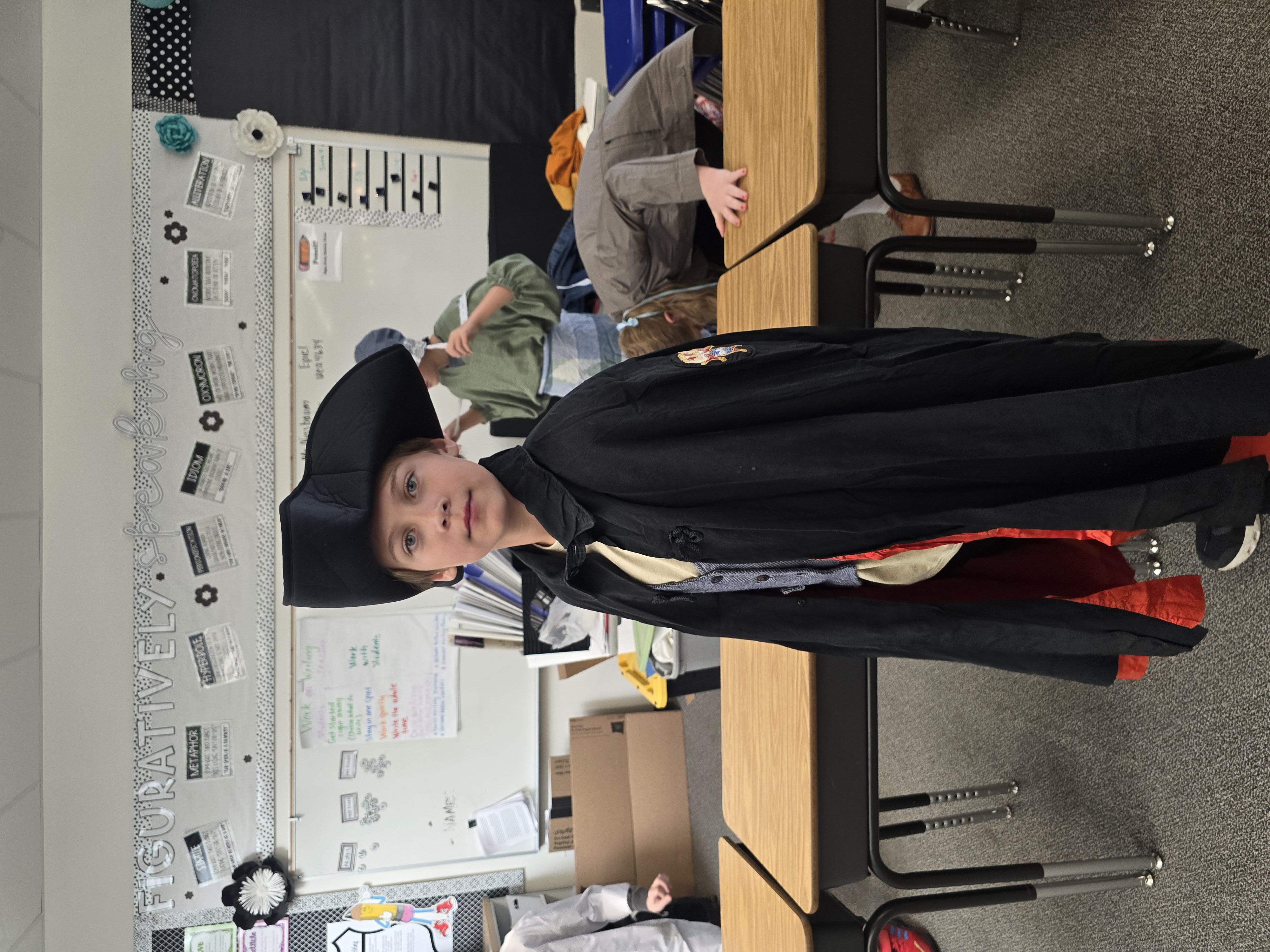
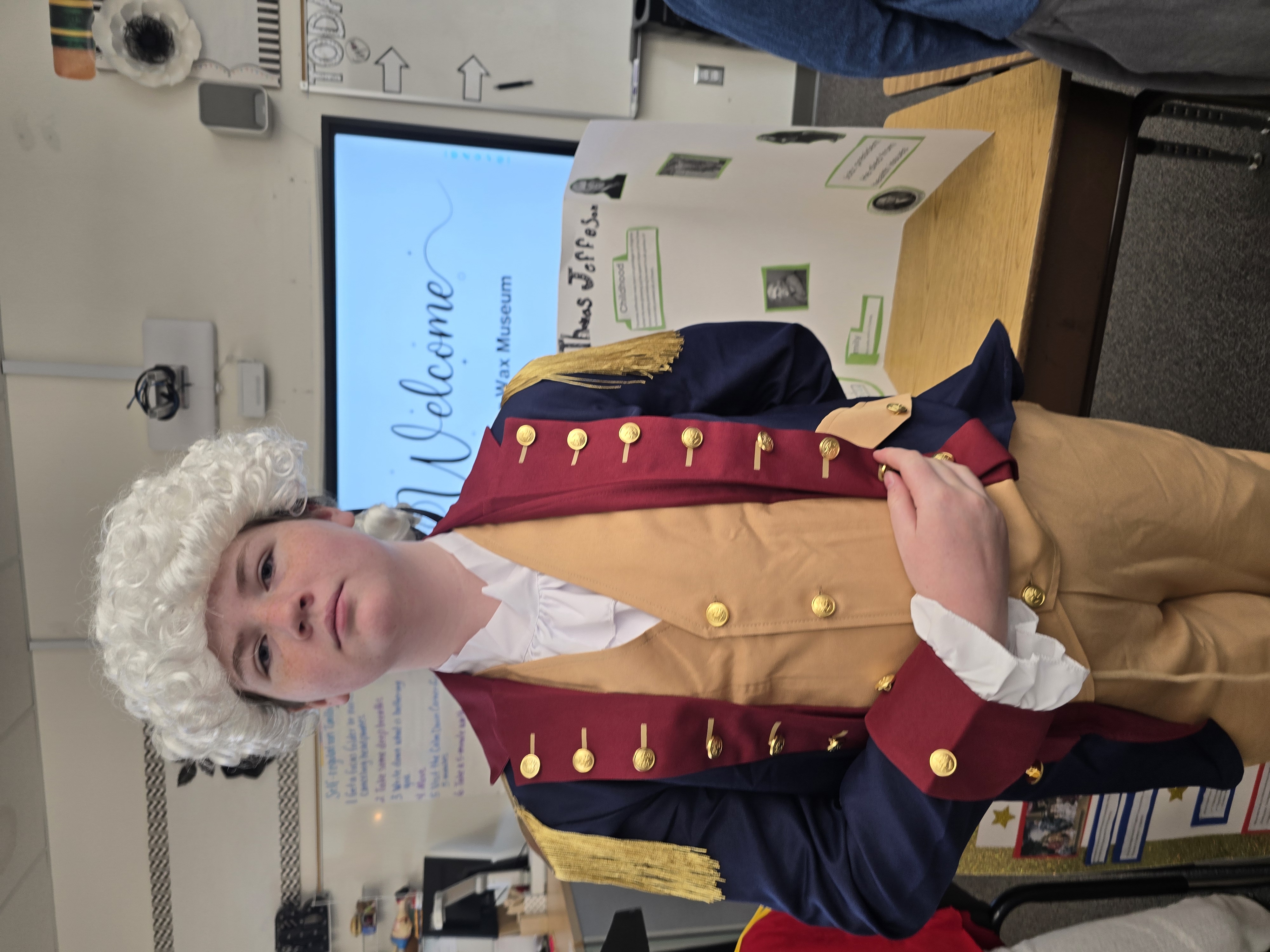
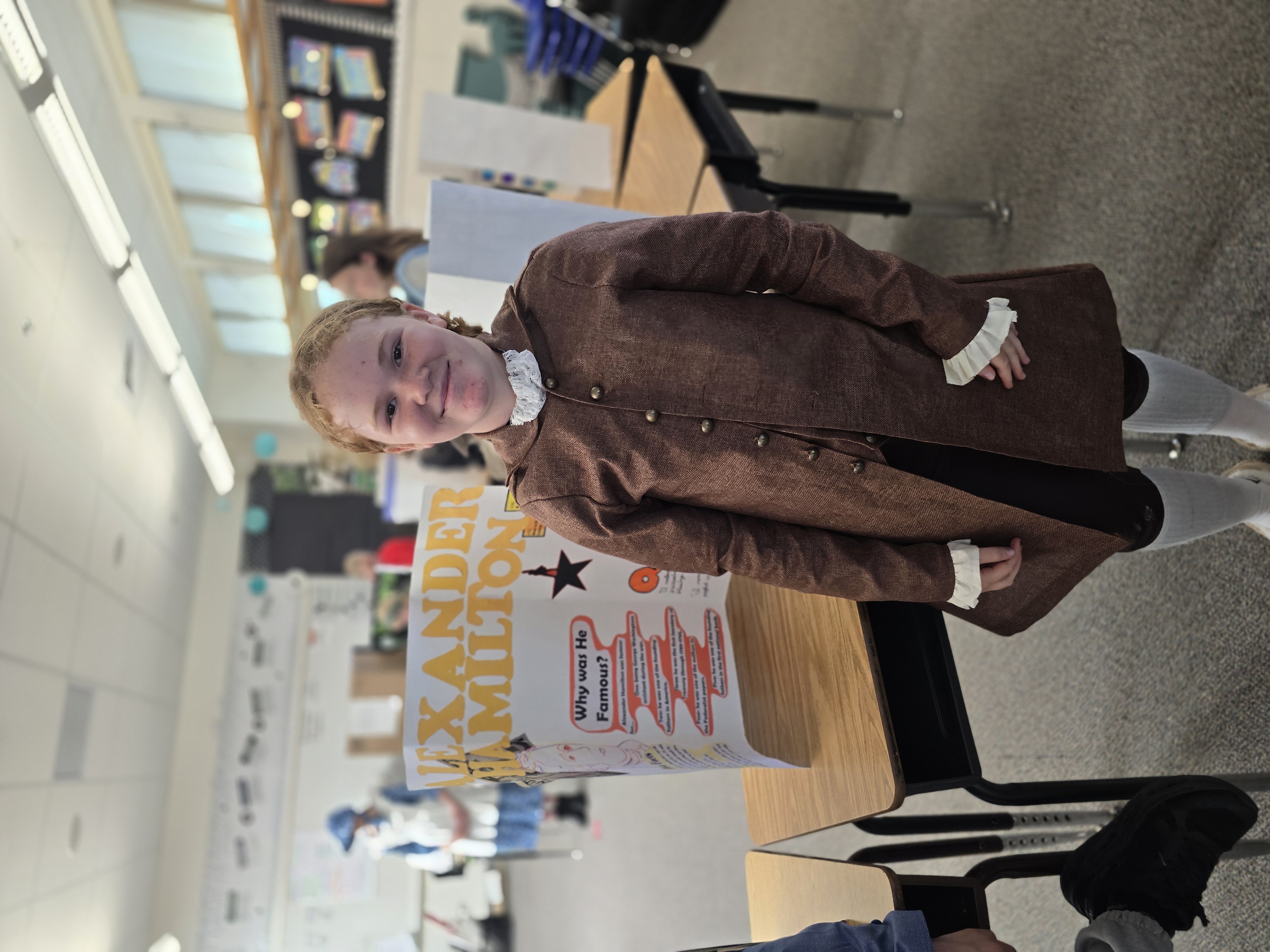
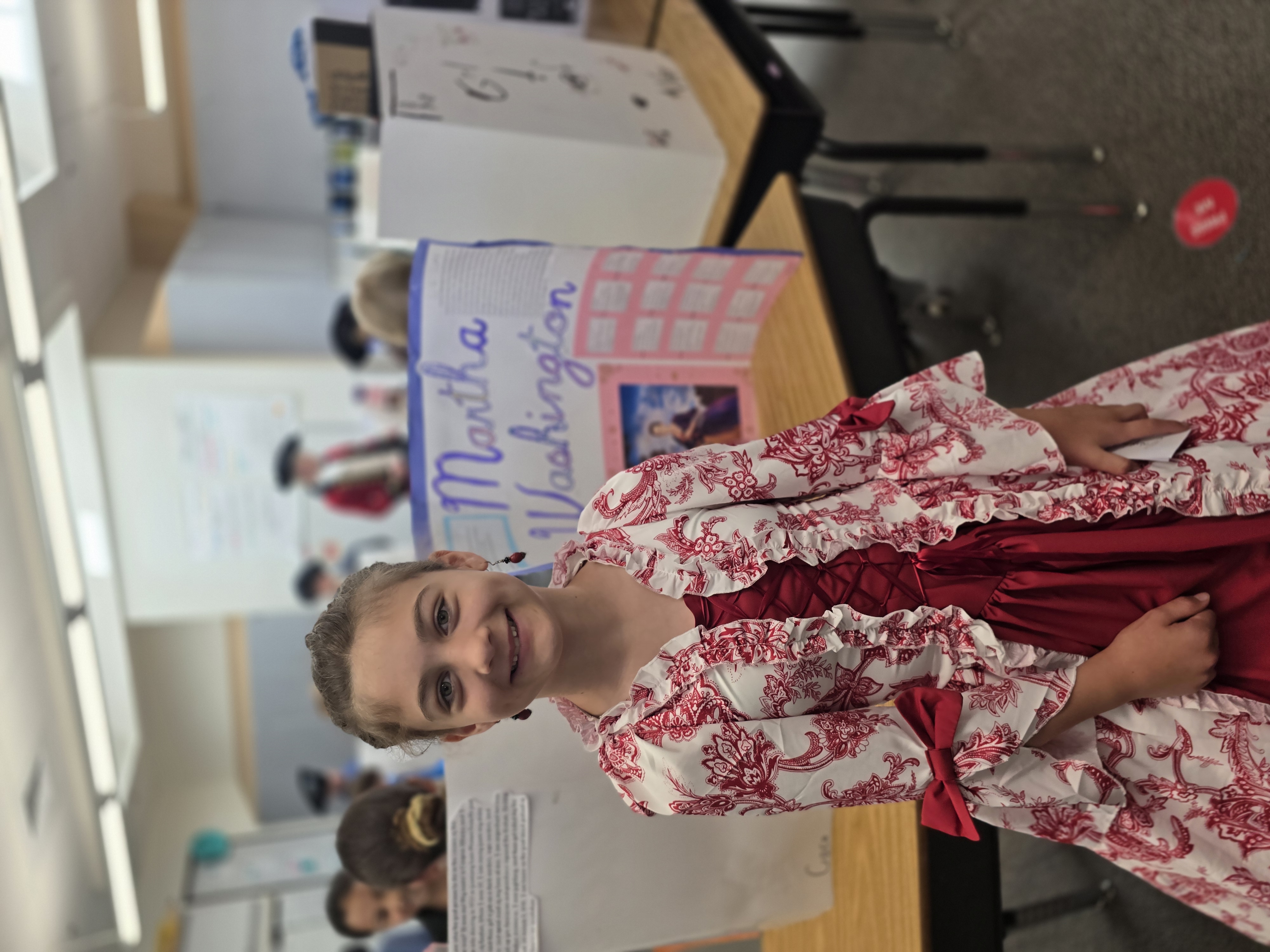
The following artifacts showcase student learning throughout the Living Wax Museum project. Notice how students transformed their historical research into authentic presentations by combining informational writing, visual communication, and public speaking. These examples demonstrate students' historical understanding, creativity, and ability to communicate their learning to an authentic audience.



Reflection
Teaching this unit provided several valuable insights that will strengthen future implementation. The biggest revision I would make involves the organization of the research notes. Students were required to gather information from at least three sources representing two different source types. To support this, the project packet included three note-taking pages for each research category (Early Life, Reason for Fame, and a third topic of choice). Although my intention was to provide ample space for notes from multiple sources, many students interpreted the packet to mean they were expected to complete nine pages of notes. In future versions, I would simplify the packet by providing one note-taking page for each source rather than each topic. Each page would include the complete set of research questions, allowing students to record only the information available from that particular source. This organization more accurately reflects the research process and eliminates unnecessary confusion.
Another area for improvement is source selection. Although I curated a small collection of online encyclopedia websites, many students struggled to locate three reliable, age-appropriate sources containing sufficient information. If I were redesigning the unit, I would provide one vetted article for every historical figure and expand the collection of teacher-approved digital resources. Curating these materials in advance would ensure that students spend their time analyzing information rather than searching unsuccessfully for appropriate sources.
This project also reinforced the importance of explicitly teaching research literacy before beginning the investigation. Students need prior instruction on evaluating source reliability, as many assumed that the easiest website to access was also the most trustworthy. A review of nonfiction reference materials and text features, including encyclopedias, indexes, tables of contents, headings, and captions, would better prepare students to locate information efficiently and navigate informational texts with confidence.
One aspect of the unit that proved particularly successful was the use of incremental deadlines throughout the project. Breaking the work into manageable phases with regular checkpoints helped students stay organized and prevented them from falling significantly behind. Maintaining a Project Progress Checklist allowed me to monitor individual progress, provide timely interventions, and conference with students who needed additional support. These structured checkpoints contributed significantly to the overall success of the project and are a feature I would continue to include in future implementations.
Despite these revisions, the culminating Living Wax Museum remained one of the most rewarding experiences of the unit. Students took great pride in becoming experts on their historical figures and confidently shared their learning with an authentic audience, demonstrating both historical understanding and growth as researchers, writers, and presenters.
Standards Alignment and Skill Development
The Living Wax Museum provides students with authentic opportunities to apply literacy skills within a meaningful social studies context. Throughout the project, students think like historians, writers, museum exhibit designers, and presenters while demonstrating proficiency across multiple content areas.
Reading: Informational Text
-
Read a variety of nonfiction sources to gather factual information about a historical figure.
-
Use nonfiction text features (e.g., headings, tables of contents, indexes, captions, and timelines) to locate relevant information efficiently.
-
Determine the main idea and supporting details of informational texts.
-
Synthesize information from multiple texts to develop a comprehensive understanding of a topic.
-
Summarize information from nonfiction texts.
-
Evaluate the reliability and usefulness of research sources.
Writing
-
Take organized research notes from multiple sources.
-
Paraphrase and accurately record information from research.
-
Synthesize information into well-organized informational summaries.
-
Write a first-person historical speech using accurate facts and engaging language.
-
Revise and edit writing using the writing process.
Speaking & Listening
-
Present historical information clearly and confidently to an authentic audience.
-
Use appropriate volume, pacing, voice inflection, facial expressions, eye contact, and purposeful gestures during oral presentations.
-
Listen actively and provide constructive feedback to peers.
-
Ask and answer questions to deepen understanding.
Language
-
Apply conventions of capitalization, usage, punctuation, and spelling (CUPS) when revising and editing written work.
-
Use precise academic and historical vocabulary to communicate ideas effectively.
Social Studies
-
Investigate the lives and contributions of significant individuals from the American Revolution.
-
Analyze how historical figures influenced the events that led to the birth of the United States.
-
Develop a deeper understanding of the causes, key events, and lasting significance of the American Revolution through historical inquiry.
-
Use historical evidence from multiple sources to build an accurate understanding of a historical figure and his or her role in American history.
What Others Say
"One project that exemplifies her creativity and instructional expertise was our fifth-grade Living Wax Museum. She thoughtfully integrated our writing and social studies standards into a cross-curricular project involving all 66 fifth-grade students. Each student researched a historical figure, created an informational display board, dressed as their chosen character, and delivered a first-person speech to visitors. The project not only deepened students' understanding of history but also strengthened their research, writing, and presentation skills while creating an unforgettable learning experience for students and families alike."
-Tenaya Wave, Teacher & Colleague